The Future of Remote Work and Its Influence on the Housing Market
5 August 2026

For the better part of a century, the American housing market was built on a simple, almost gravitational principle: you live where you work. Cities grew around factories, then around corporate headquarters. Suburbs swelled because commuting by car became feasible. The value of a home was tied to its proximity to a job center, a school district, and the daily grind of the morning rush hour.
Then, almost overnight, the pandemic severed that link. The office became optional. The commute became a walk from the bedroom to the kitchen table. And for the first time in modern history, millions of people looked at their homes not as a place to sleep near work, but as the center of their entire professional existence.
That shift was not a temporary blip. It was a structural realignment. And its influence on the housing market is still unfolding, creating winners and losers, opportunities and traps, in ways that many buyers, sellers, and investors are only beginning to understand.
This is not a story about the death of the office. It is a story about the revaluation of space, the redistribution of wealth, and the quiet, powerful reshaping of what "home" actually means.
The End of the Commute Tax
For decades, the single largest line item in a family's budget after housing was transportation. The standard advice was to spend no more than 28 percent of your gross income on housing. But the real constraint was time. A two-hour daily commute effectively cost you ten hours a week, fifty hours a year, time you could never get back.
Remote work did not eliminate the commute. It eliminated the fixed commute. That changes everything about how people value property.
Consider two homes at the exact same price point. One is a small condo ten minutes from a downtown core. The other is a larger house with a yard, forty-five minutes from the same downtown. In a world where you must be in the office five days a week, the condo is the rational choice. The house costs you two and a half hours of your life every single day.
But if you only need to be in the office twice a week, the calculus flips. The house now costs you an extra hour and a half per week, not per day. That is a trade most people will happily make to gain a home office, a garden, and a thousand extra square feet.
This is the core mechanism driving the housing market over the last few years. It is not that people suddenly hate cities. It is that the penalty for leaving them has dropped dramatically. The "commute tax" has been slashed from a daily levy to a weekly one, and in many cases, to a monthly one.
The Suburban and Exurban Boom: A Closer Look
The immediate effect was a predictable surge in demand for suburban and exurban properties. Towns that were once considered "bedroom communities" became "primary communities." People who had never considered living in the Hudson Valley, the Catskills, or the foothills of the Rockies suddenly found those areas not just feasible, but financially attractive.
But this is not a simple story of "people moved to the countryside." It is a story of selective migration. The people who moved were overwhelmingly those in high-income, knowledge-based professions: software engineers, financial analysts, marketing directors, consultants. They could take their salaries with them.
This created a stark bifurcation. In desirable small towns with good schools and scenic surroundings, home prices skyrocketed. In less desirable rural areas, where the jobs were already scarce, the arrival of remote workers was often minimal. The boom was not about "rural America." It was about "amenity-rich, livable small towns within a three-hour drive of a major airport."
Let me give you a concrete example. A town like Bozeman, Montana, became a poster child for this trend. It had outdoor recreation, a vibrant downtown, and a growing tech presence. When remote work became widespread, demand from out-of-state buyers exploded. Prices rose so fast that local teachers and nurses, who were not remote workers, could no longer afford to live there.
The same pattern repeated in places like Austin's outer suburbs, the foothills of the Sierra Nevada, and the coastal towns of New England. The common thread was not cheap land. It was lifestyle plus connectivity. People were willing to pay a premium for a place where they could hike in the morning and take a Zoom call in the afternoon.
The Secondary City Phenomenon
Beyond the suburbs, a second, more subtle shift occurred: the rise of secondary cities. Places like Nashville, Raleigh-Durham, Columbus, and Boise began to attract remote workers who had been priced out of San Francisco, New York, or Seattle. These cities offered a lower cost of living, a reasonable airport, and a growing cultural scene.
But here is the nuance that most pundits miss. Remote workers did not simply move to the cheapest place they could find. They moved to places that offered a lifestyle arbitrage. That means they kept their big-city salary but paid small-city prices. This created enormous upward pressure on housing in those secondary cities, which in turn led to a local affordability crisis.
The locals in those cities often resented the newcomers. From their perspective, a remote worker from California was not "moving to the community." They were "gentrifying the neighborhood." The tension is real, and it is a direct consequence of the remote work revolution.
If you are considering moving to a secondary city, you need to be aware of this dynamic. You are not just buying a house. You are entering a social and economic ecosystem that may be experiencing significant strain. The best approach is to spend significant time in the area first, understand the local culture, and be respectful of the fact that your purchasing power may be dramatically higher than that of your new neighbors.
The Revaluation of Space Within the Home
The most overlooked influence of remote work is not on where people buy, but on what they buy. The floor plan has become a financial asset.
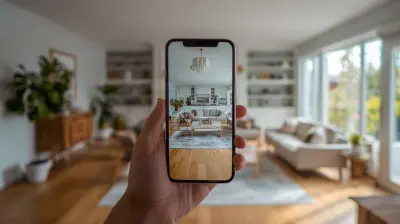
Before 2020, a three-bedroom, two-bathroom house was standard. The living room was for entertaining, the dining room for holidays, and the extra bedroom for guests. After 2020, the equation changed. The living room became a shared office. The dining room became a video conference studio. The guest bedroom became a quiet retreat for deep work.
Homes with a dedicated home office, or even better, a separate studio or guest house, commanded a significant premium. This is not just a preference. It is a productivity requirement. If you are on video calls all day, you need a space with a door that closes, good lighting, and enough acoustic separation that your family cannot hear your client presentation.
This has led to a strange phenomenon: the "office premium." Two homes of identical square footage can differ in value by five to ten percent based solely on whether they have a functional, private workspace.
For buyers, this means you should not just count rooms. You should evaluate the utility of each room. Can the third bedroom fit a desk and a bookshelf without feeling cramped? Is there a hallway closet that could be converted into a phone booth? Is the basement finished enough to serve as a separate office?
For sellers, the advice is even more direct. If you are selling a home in a remote-work-friendly market, do not stage the extra bedroom as a nursery. Stage it as a professional office. Put a nice desk, a comfortable chair, and a plant in there. Show the buyer how their life will function. You are not selling square footage. You are selling a solution to their daily stress.
The Misconception of the "Hybrid" Compromise
Many companies have settled on a hybrid model: two or three days in the office, the rest remote. The common assumption is that this is a stable equilibrium. It is not.
Hybrid work creates a unique set of housing pressures. It means you still need to live within a reasonable distance of the office, but you do not need to be close enough to go every day. This has led to the growth of the "commuter shed" extending outward. In the New York metro area, for example, towns in Pennsylvania's Lehigh Valley and New Jersey's Sussex County have seen increased interest from people who only need to be in Manhattan twice a week.
But hybrid work is fragile. Companies are constantly reassessing their policies. A company that is hybrid today could demand five days in the office next year. If you buy a house based on a two-day commute assumption, and your employer changes the rules, you are stuck.
This is a critical risk assessment. Before you buy a home in a far-flung suburb or a rural area, you need to ask yourself a hard question: "What happens if my company calls me back to the office full-time?" If the answer is that you would have to sell or endure a brutal commute, you are taking on significant financial risk.
The safest approach is to assume that your remote work status could change at any time. Buy a home that you could live in, and afford, even if you had to return to the office three or even four days a week. If you can comfortably handle the worst-case commute, you are protected. If you cannot, you are gambling.
The Rental Market and the New Landlord
The influence of remote work extends to the rental market as well. Landlords of urban apartments have faced a persistent challenge: the demand for small, one-bedroom units in city centers has softened. Meanwhile, demand for larger apartments and single-family rentals in suburban and exurban areas has surged.
This has created an interesting opportunity for individual investors. A duplex in a suburban area, or a house with a legal accessory dwelling unit (ADU), can now serve two distinct purposes: a residence for the owner and a rental unit for another remote worker. The ADU market, in particular, has exploded. A well-built ADU with a separate entrance, a kitchenette, and reliable high-speed internet can generate rental income that nearly covers the entire mortgage on the main house.
However, this is not a passive investment. You are becoming a landlord, which means dealing with tenants, maintenance, and local zoning laws. The key is to buy a property where the ADU or the rental unit is truly independent. Shared walls are fine, but shared entrances and shared utilities are a nightmare. The best ADUs have their own meter, their own internet connection, and their own parking spot.
The Internet as the New Location Factor
In the traditional housing market, the three most important factors were "location, location, location." In the remote work era, that has been amended to "location, internet, location."
The quality of broadband is now a non-negotiable factor in property valuation. A home with fiber optic internet is worth more than a home with only DSL, even if the DSL is technically functional. For remote workers who rely on video conferencing, large file transfers, and cloud-based applications, a slow connection is not an inconvenience. It is a career killer.
This has created a new digital divide. Rural areas with poor internet are being left behind, not because they are not beautiful, but because they are not functional. A remote worker cannot move to a cabin in the woods if the connection drops every time it rains.
If you are looking at a property in a semi-rural area, do not trust the listing's claim of "high-speed internet." Go to the property, plug in a laptop, and run a speed test. Check the upload speed, not just the download speed. Many people have excellent download speeds but terrible upload speeds, which makes video calls choppy and laggy. Also, check for data caps. Some satellite providers impose strict limits that make heavy remote work impossible.
The School District Paradox
One of the most counterintuitive effects of remote work has been on school districts. In the past, the quality of the local school district was the single biggest driver of home prices in suburban areas. Families would pay a premium to live in a district with high test scores and a good reputation.
Remote work has not eliminated that premium, but it has changed its nature. Many remote workers are not tied to a specific school district because they are not tied to a specific office. They can choose to live in a district that is great for their kids, even if it is far from any city. This has intensified competition for homes in top-tier districts, even in areas that are not near major employment centers.
However, there is a second, darker trend. Some remote workers with young children are delaying school enrollment or choosing to homeschool, which reduces the importance of the school district. This has created a divergence. The very best districts remain highly desirable and expensive. The average districts, which used to be the safe bet for middle-class families, are seeing less demand. The result is a polarization of the market: the top and the bottom are doing well, but the middle is struggling.
The Climate Factor and the Future of "Zoom Towns"
A "zoom town" is a place that became popular because of remote work. Many of these towns are in areas that are prone to natural disasters: wildfires in the West, hurricanes in the Southeast, and flooding in coastal areas. The influx of remote workers has driven up prices in these areas, but it has also increased the financial risk for the new residents.
If you are considering moving to a scenic area that is also a wildfire zone, you need to think about insurance. Homeowners insurance in high-risk areas has become increasingly expensive and, in some cases, impossible to obtain. If you cannot get insurance, you cannot get a mortgage. This is a practical constraint that many remote workers overlook.
The best practice is to check the FEMA flood maps and the state's fire hazard maps before you fall in love with a property. Do not rely on the seller's disclosure. Do your own research. A home that is 20 percent cheaper but in a high-risk zone may end up costing you far more in insurance premiums and potential disaster recovery.
What This Means for the Next Five Years
Looking ahead, the most likely scenario is not a full return to the office, nor a permanent 100 percent remote workforce. It is a continuation of the hybrid model, but with more flexibility for senior and high-performing employees.
This has a specific implication for housing. The "sweet spot" for home values will be in the "one-hour rule" zone: places that are within a one-hour drive of a major city, but not necessarily in the city's immediate suburbs. These are the areas where a two-day-a-week commute is tolerable and where you can get more space for your money.
The big urban centers will not collapse, but they will become more specialized. They will be dominated by single people, young couples without children, and people who genuinely love the urban lifestyle. The family-oriented urban neighborhood, which was popular before the pandemic, may see slower growth.
For investors, the opportunity is in the "middle market" of secondary cities and the outer ring of major metros. Look for towns that have a good hospital, a decent airport within an hour, a walkable downtown, and, most importantly, a solid internet infrastructure. These are the places that will attract the next wave of remote workers.
The Critical Mistake: Buying for the Job You Have, Not the Career You Want
The single biggest mistake I see remote workers make is buying a home that is perfect for their current job but terrible for their future career. If you are a mid-level employee at a company that is fully remote today, that is great. But what if you get promoted to a role that requires more collaboration? What if you are laid off and the best new job requires you to be in an office three days a week?
Your home is not just a place to live. It is a financial anchor. If you buy a home in a remote-only location, you are essentially betting that your career will remain remote indefinitely. That is a risky bet.
A more prudent approach is to buy a home that is in a location with a diverse local economy, even if you do not currently need it. A town with a hospital, a university, and a manufacturing base is more resilient than a town that only has tourism and vacation rentals. If your remote job disappears, you have options.
The Trade-Off of Space vs. Community
Finally, I want to address the emotional dimension. Remote work has given people the freedom to choose space over community, but that choice has a cost. Many people who moved to a large house in a rural area have found that they miss the spontaneity of urban life. They miss running into friends at a coffee shop. They miss the cultural events, the restaurants, and the sheer energy of a city.
The housing market reflects this. We are starting to see a slight cooling in the most remote exurban areas, as some people realize that a big house is not worth the isolation. Meanwhile, the demand for walkable, mixed-use neighborhoods in smaller cities is growing.
The best decision is not to choose between space and community. It is to find a place that offers both. That usually means a smaller city or a "suburban town center" where you can have a house with a yard, but also a downtown that you can walk to. These places are rare, and they are becoming more expensive as more people seek them out.
Final Thoughts
The future of remote work is not a straight line. It is a series of adjustments, experiments, and reversals. The housing market will continue to react to these changes, sometimes in unpredictable ways.
The key is to remain flexible. Do not buy a home that locks you into a single future. Buy a home that gives you options. That means a home with a versatile floor plan, a location with a decent commute to multiple job centers, and a community that you genuinely enjoy, not just one that looks good on a spreadsheet.
The remote work revolution has given us the freedom to choose where we live. That freedom is valuable, but it is also a responsibility. The best home is not the one with the most square footage, or the one with the best view. It is the one that lets you live your life, work your job, and raise your family without sacrificing one for the other.
all images in this post were generated using AI tools
Category:
Housing Market TrendsAuthor:

Lydia Hodge
Discussion
rate this article
1 comments
Sage West
As remote work reshapes priorities, housing markets must adapt to new lifestyle demands and preferences.
August 7, 2026 at 2:32 AM
Lydia Hodge
Absolutely, remote work is driving a shift in what people seek in homes. Space, location, and amenities are becoming more crucial as lifestyle priorities evolve.